
Where is Columbia Heights, and what is it near?
Columbia Heights sits in the Northwest quadrant of DC, in Ward 1, covering ZIP codes 20009 and 20010. The neighborhood runs roughly from Spring Road to Florida Avenue, and from 16th Street NW east to Georgia Avenue NW. It borders Petworth to the north, Mount Pleasant to the west, Adams Morgan to the southwest, and Shaw to the southeast, with the U Street/Cardozo corridor directly to the south. What makes the location work for buyers is how central it is. The Columbia Heights Metro sits one stop from U Street and four from Gallery Place, on the Green Line (with Yellow Line service restored in late 2025), which means you can reach Navy Yard, Anacostia, College Park, and Greenbelt without a transfer. For a lot of buyers, that one fact does more work than any other.Why does Columbia Heights look the way it does?
Columbia Heights looks the way it does because of three eras stacked on top of each other: an early-1900s building boom, decades of disinvestment after 1968, and a Metro-driven rebuild that started in 1999. The neighborhood takes its name from Columbian College (now George Washington University), which was founded here in 1821 on what had been Holmead family farmland called Pleasant Plains. Upscale development around 1900 was designed to attract upper-level federal managers, Supreme Court justices, diplomats, and high-ranking military officers, and for a stretch some of Washington's wealthiest residents lived here. The Arcade Market went up in 1910. From the 1930s, Columbia Heights became a strong Black middle-class enclave. Then the 1968 riots that followed the assassination of Martin Luther King Jr. ravaged the 14th Street corridor, and decades of vacancy and disinvestment followed through the 1970s and 1980s. The modern turnaround really starts with the opening of the Columbia Heights Metro station in 1999 and the development of the DC USA retail complex in 2008. The station served as a catalyst for the return of both residents and economic development. Through all of it, the neighborhood kept deep roots in DC's Latino community: the Salvadoran and Mexican restaurants along 14th Street, the vendors at the civic plaza on weekends. They have been here for decades.What kind of homes does Columbia Heights have?
Columbia Heights is denser and more condo-forward than its rowhouse neighbors, so you are really choosing between two kinds of home: an early-1900s rowhouse or a condo near the Metro. The rowhouses were mostly built between 1900 and 1930. They are brick-front Wardman-style homes with bay windows, hardwood floors, and front porches. Many have been renovated over the past 15 years, some with pop-tops that add a full third or fourth story. Pop-tops are common and polarizing architecturally, but they add significant square footage, and they can push value above $1 million by turning a 3-bedroom into a 4- or 5-bedroom. Condos are concentrated near the Metro and along 14th Street, with one- and two-bedroom units commonly running from the mid-$300s to the mid-$500s. That condo supply is the biggest housing difference between Columbia Heights and Petworth: here, a condo near the train is a normal first purchase, not an exception. When we tour with buyers, we break the neighborhood into three pockets, because they live very differently:
- Near the Metro and Civic Plaza (around 14th and Irving): condos dominate here. It is the most urban-feeling part of the neighborhood: louder, more active, and more convenient.
- The 11th Street corridor (from Park Road to Monroe Street and beyond): a quieter, more residential alternative to 14th Street with an increasingly strong restaurant and bar scene. Homes here are mostly rowhomes, some with pop-tops.
- The east side toward Georgia Avenue: wider streets, more detached homes, and a calmer pace. This section borders Petworth and shares some of its character, with front porches, families, and long-term residents. Prices tend to run slightly lower than the blocks closest to the Metro.
Can you get around Columbia Heights without a car?
For most residents, yes. Columbia Heights consistently scores above 90 on Walk Score, and most people handle daily errands on foot. The anchor is the Columbia Heights Metro station, on the Green and Yellow Lines, which opened in September 1999 and sits at the heart of the neighborhood. It is one stop from U Street, two from Shaw, and four from Gallery Place-Chinatown. The Green Line continues south to the waterfront and Navy Yard, while the Yellow Line splits off toward Pentagon and Reagan National Airport. Downtown is an 8 to 12 minute ride. Buses cover 16th Street, 14th Street, and crosstown routes, and Capital Bikeshare stations sit on nearly every other block. Parking is available but not always easy: most rowhomes have rear alley parking, while condo buildings vary. If a car space matters to you, it is one of the first filters we apply to listings.What is the shopping and dining like in Columbia Heights?
Columbia Heights centers on the DC USA complex (a full-size Target, plus Best Buy and Marshalls) and the 11th Street restaurant corridor, with most daily errands a 5- to 10-minute walk from anywhere in the neighborhood. The DC USA complex at 14th and Irving opened in 2008 as a 546,000-square-foot mall directly across from the Metro, with about 1,000 underground parking spaces. Giant Food on Park Road covers groceries, and Target sells them too. On the dining side, the 11th Street corridor between Park Road and Monroe has quietly become one of DC's best dining strips, with a deep roster of Latino and Asian restaurants. The civic plaza at 14th and Irving, right outside the Metro, functions as the neighborhood's living room: farmers markets, community events, political rallies, and everyday foot traffic all converge there, with the Columbia Heights farmers market just across from DC USA.What parks and landmarks define Columbia Heights?
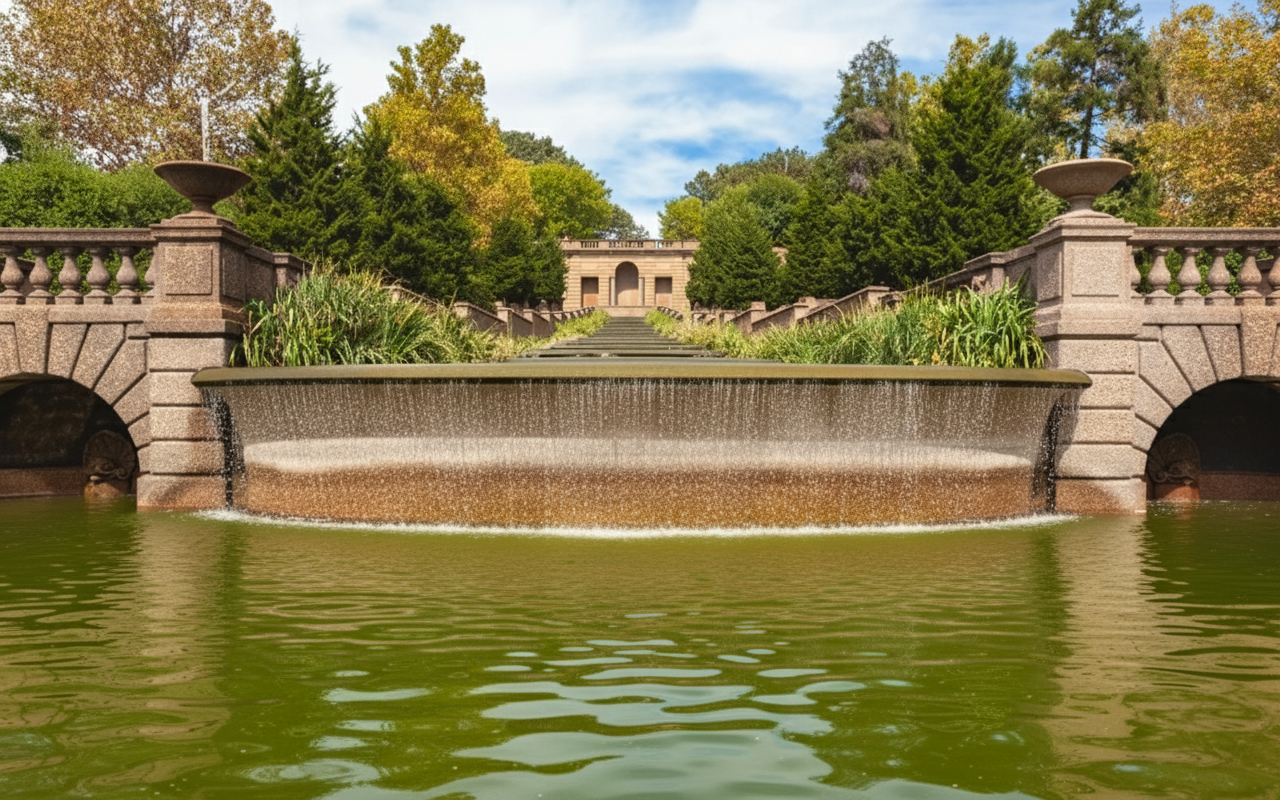
Two landmarks anchor the neighborhood's identity: Meridian Hill Park and the restored Tivoli Theatre. Meridian Hill Park, which many locals call Malcolm X Park, sits on the southern edge of the neighborhood, a short walk south near 15th and 16th Streets. It is a national park run by the Park Service, known for its cascading Italian-style fountain. The Tivoli Theatre, a 1924 movie house that sat vacant from 1976, was renovated into Tivoli Square, and in January 2005 it became the first permanent home of the GALA Hispanic Theatre, a company that has performed Spanish-language plays since the 1970s. That theater ties directly to the neighborhood's long Latino identity.What schools serve Columbia Heights?
Columbia Heights is served by several DCPS schools, including Columbia Heights Education Campus (CHEC), which offers a dual-language Spanish-English program. A nearby charter option is E.L. Haynes Public Charter School on Georgia Avenue, and Cardozo Education Campus borders the southern edge. Families in the neighborhood often choose from both DCPS and charter options depending on program fit. One important caveat: DC redraws school attendance boundaries from time to time, and the in-boundary school depends on your exact block. Before you rely on a specific school, confirm the current in-boundary assignment for any address using the DCPS boundary tool, and remember that the My School DC lottery is how you reach out-of-boundary and charter seats. If schools are driving your search, we will map your specific addresses against current boundaries before you fall for a house.What do homes cost in Columbia Heights?
Prices span a wide range, so the honest answer is a set of tiers rather than one number. The figures below are list-price ranges as of mid-2026, and we re-pull current market data before you set a budget.- Condos: roughly $300,000 to $500,000, with most one- and two-bedroom units near the Metro running from the mid-$300s to the mid-$500s. A condo in the mid-$300s can be a strong first purchase.
- Renovated rowhouses: a renovated 3-bedroom typically runs from the high $700s to the low $900s, with the broader rowhouse range from about $700,000 to $900,000 and up.
- Value-add rowhouses: unrenovated or estate-condition rowhouses fall in the $500,000 to $650,000 range, the entry point for buyers willing to do some work.
- Pop-tops and homes with a legal basement unit: these sometimes push above $1 million.
How does Columbia Heights compare to Petworth?
Columbia Heights is more urban, more commercial, and more transit-oriented. Petworth is quieter, more residential, and generally offers more space for the dollar. The two neighborhoods share a border and a Metro line (the Green and Yellow), and a lot of buyers compare them side by side, so here is how they actually differ.- Rowhouse prices: Columbia Heights runs about $700,000 to $900,000 and up, generally starting higher near the Metro. Petworth runs about $600,000 to $900,000 and up. The Columbia Heights east side near Georgia Avenue runs lower and shares Petworth's character.
- Condo prices: about the same in both, roughly $300,000 to $500,000.
- Metro to downtown: 8 to 12 minutes from Columbia Heights, 10 to 15 from Petworth.
- Walkability: Columbia Heights scores above 90 on Walk Score, while Petworth sits in the high 80s.
- Space: both are mostly 1900-to-1930 brick Wardman rowhouses, but a Petworth rowhouse typically buys more square footage and yard, with some semi-detached homes and side yards. Columbia Heights is denser and more condo and apartment heavy near the Metro.
Frequently asked questions about buying in Columbia Heights
What ZIP codes is Columbia Heights in?
What kind of homes can you buy in Columbia Heights?
Can you live in Columbia Heights without a car?
What is a pop-top, and does it add value?
What is the most affordable way to buy in Columbia Heights?
Is Columbia Heights or Petworth better for more space?
About the author

Marc Dosik, Fed City Team at Real Broker LLC
Marc is the Associate Broker and primary decision-maker for Fed City Team. He has lived in the Washington, DC metro area his whole life and has been a licensed broker since 1998. He knows the DC market and specializes in contracts, negotiation, grant programs for home buyers, short sales and foreclosures, and 1031 exchanges. His office is on Upshur Street in Petworth, a short walk from the Georgia Ave-Petworth Metro, and the team works across DC, Maryland, and Virginia.
Thinking about buying in Columbia Heights? Start your home search with Marc today, or reach the team at (202) 543-7283 or [email protected].
Explore neighborhoods: Columbia Heights · Petworth · all DC areas. Buying for the first time? See Buy a Home.
Disclaimer: Real estate prices, public assistance and tax programs, school boundaries, transit routes, and the specific retailers and restaurants referenced here change frequently and vary by address. This article is general information, not financial, legal, tax, or investment advice. Confirm current figures, eligibility, boundaries, and school assignments with the relevant DC agency or a licensed professional before making any decisions.
Check out this article next