
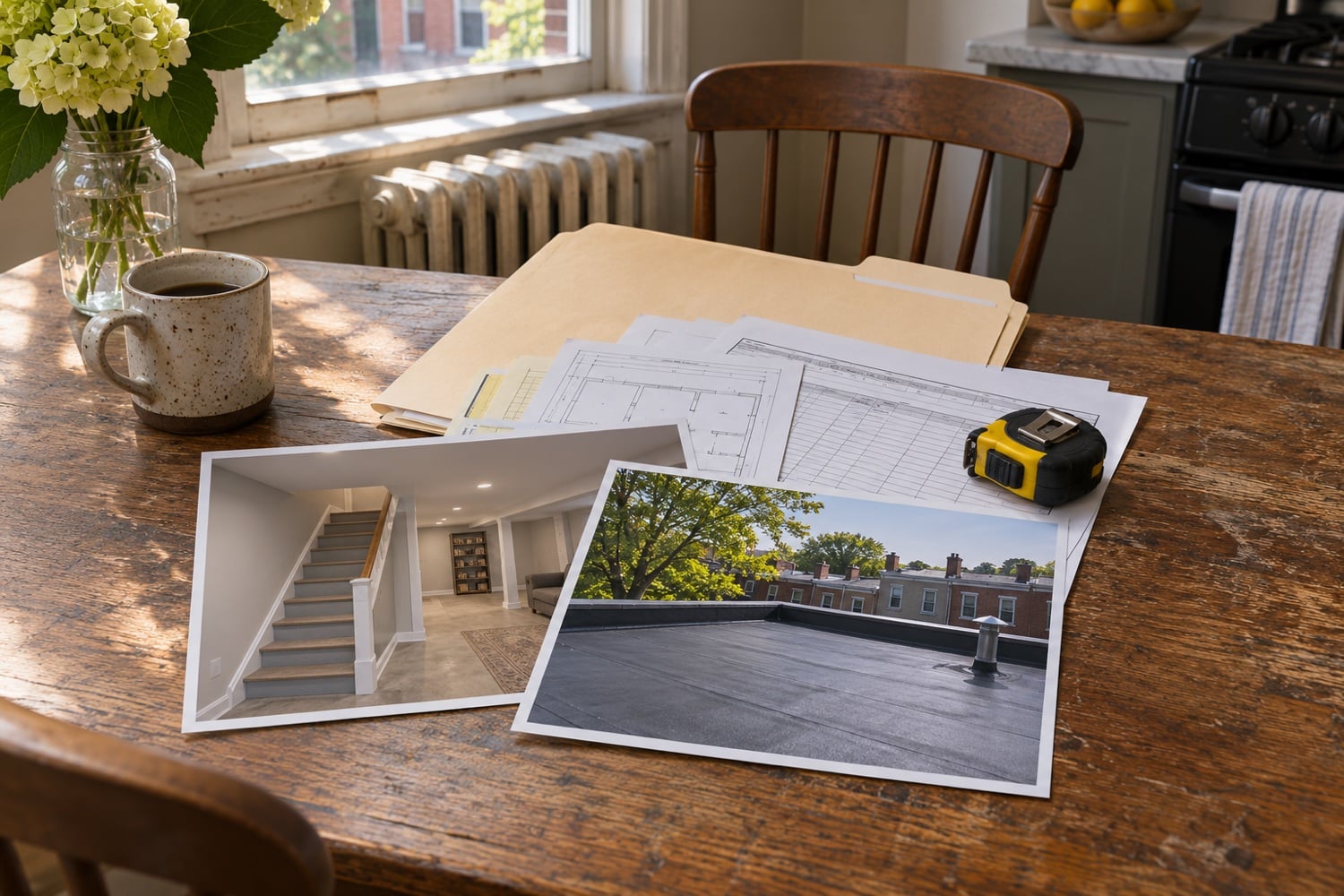
Say you’ve accepted an offer on your Petworth rowhouse. The buyer’s lender has ordered an appraisal, and your agent calls to arrange a visit. You replaced the roof a few years ago and finished the basement. From the front door, the house looks much the way it did when you bought it. How will the appraiser know what changed?
I’d start with the roof invoice and a short description of the basement work. Send both to your listing agent. A person walking through your house can see the downstairs bathroom. They’re unlikely to know when the roofer finished the job or whether the work covered the whole roof.
The buyer’s lender uses the appraisal to help decide how much it can lend. Your part is to make the house accessible and give the appraiser accurate information. The appraiser decides which sales to compare and reaches an independent opinion of value.
Put the work you’ve done on one page
Take a sheet of paper and give each major project one line. Write down what changed, when the work was finished and which record backs it up. Here’s what that might look like for a DC rowhouse:
- Roof. “Main roof membrane replaced in 2022. Rear porch roof was outside the scope.” Attach the roofer’s final invoice if you have it.
- Basement. “Finished the rear room and added a full bath in 2021. Front utility room is unfinished.” Include a plan or the permit and final inspection record if you have them.
- Heating and cooling. “Replaced the upstairs cooling system in 2024. Existing boiler still serves the house.” A receipt with the installation date helps explain which equipment changed.
If you only know the approximate year, say so. If the work predates your ownership, tell your agent where the information came from. A dated invoice or permit record gives the appraiser something they can check. A renovation bill tells them what you spent. What buyers have paid for similar homes helps them judge how much the improvement contributes to value.
Show how the house works, especially downstairs
Picture two Petworth rowhouses with similar brick fronts. One has a finished lower level with a bathroom, a rear entrance and an interior stair connecting it to the kitchen. Next door, the lower level houses the boiler and laundry. A front photo and a total square-footage figure leave out most of that difference.
Before the appointment, tell your agent how to reach each part of the house. If the rear door opens onto a landing below the yard, point that out. Describe which rooms are finished and how you use them. If you have records establishing a separate dwelling, share them. A second entrance by itself doesn’t establish that status.
For many conventional loan appraisals, the appraiser reports below-grade space separately from above-grade living area. A finished lower level can still contribute value. If the square footage in the report looks smaller than the listing, first check where the appraiser described the basement. Fannie Mae’s guidance on reporting living area
Let your agent explain the nearby sale that matters
Suppose a house around the corner sold last month. It has the same basic floor plan as yours and a similar finished basement. It also has a garage, while you park on the street. I’d give the appraiser the address and flag the parking difference. That’s more useful than handing over the highest sale on the block and leaving them to figure out why I picked it.
Your agent can offer recent closed sales and explain what makes each one relevant. The appraiser checks the information, chooses the comparisons and decides how to account for differences. There’s no need to ask them to hit the contract price. Fannie Mae’s comparable-sales guidance
What to do the day of the visit
Make sure your agent has a working key for the rear gate, basement and garage if those spaces lock separately. Move boxes away from the utility-room door. If there’s a dog who likes to greet people on the stairs, arrange for someone to take it out. An unlocked basement door will do more for this appointment than fresh flowers on the counter.
Have your one-page summary ready, along with the few records it references. Agree with your agent on who will meet the appraiser and who can answer a follow-up question. Once the appraiser knows how to get around the property, give them room to work.
A few questions sellers ask
What if I can’t find the receipts?
Start with what you know. Give your agent the project description and approximate date. An old contractor email, permit record or dated photo may help fill the gap. If the scope is unclear, leave that detail open.
Should I be home for the appraisal?
Ask your listing agent who is handling access. If your agent can open every part of the property and has your notes, you can usually make other plans. If only you have the detached garage key, work that out before the appointment.
What if the appraisal comes in below the contract price?
Ask your agent what the buyer’s side has shared and which deadlines apply under your contract. A report that overlooks a finished bathroom raises a different question from one that describes the home accurately and relies on lower nearby sales. If there’s a factual error, give your agent the supporting record. The buyer can ask their lender about its process for reviewing the appraisal. Then talk with your agent about what the contract allows and any proposal the buyer makes. Consumer guide to the appraisal process
If you’re getting a DC home ready to sell, start your project list while the records are handy. If you’re unsure what belongs on it, call Fed City Team at (202) 543-7283. We can look at your list together and identify what an appraiser could easily miss on a walk-through.

Check out this article next